

The past three years have been riddled with economic issues for Canada and the world. Geopolitical instability, labour market challenges, and inflation have led to another difficult year for households and businesses, as seen in the results of the Ontario Chamber of Commerce’s 2023 Business Confidence Survey.
Ultimately, Ontario’s economy has yet to feel the full, residual impacts of these challenges.
Ontario’s households and business community are not immune to the price shocks caused by geopolitical risks, especially since both food and energy make up a large portion of the average household’s monthly expenses.
Business confidence has dropped to a new low, with only 16% of organizations expressing confidence in the outlook of Ontario’s economy in 2023 (down from 29% in 2022). Inflation and labour shortages are primary concerns for organizations.
Despite low confidence in the economy, 53% of businesses are optimistic about the outlook and growth prospects of their own organizations, as high employment rates and population growth should prevent a sharp decline in consumer spending.
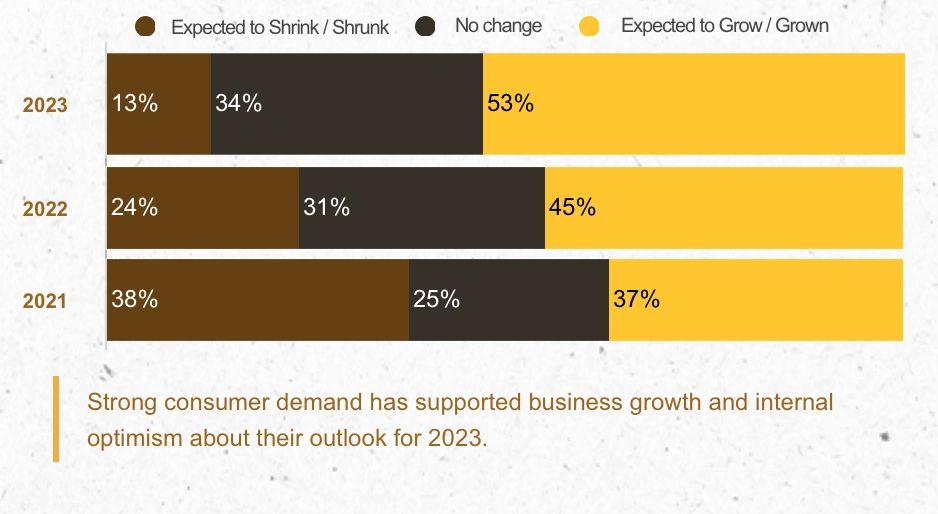
Anything above 50% means the majority of owners expect stronger performance in their own businesses over the next 3 to 12 months. A percentage of 65% generally indicates that the economy is growing at its potential. Most Canadian provinces fall below 50%, with Ontario businesses being the most optimistic.
Let’s Dissect Labour Shortages
Labour shortages are directly impacting most employers; large businesses being hit the hardest at 87%. Shortages are especially acute in mining, utilities, education, construction, accommodation, and food services.
53% of organizations participating in the Ontario Economics survey are currently facing a labour shortage and 68% say their sector is currently facing one (up from 62% in 2020).
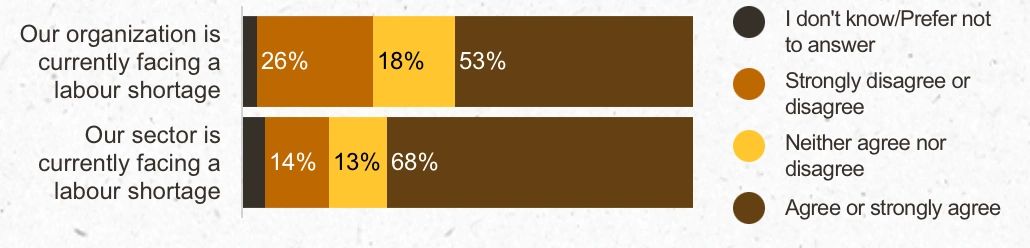
These talent gaps are driven by the confluence of factors, including:
- An ageing population;
- Immigration backlogs;
- Increased demand for skilled trades labour to support housing and other Infrastructure development projects.
In the accommodation and food services sectors, many workers have retrained during the pandemic and entered new industries.
In the health care sector, shortages are both a cause and a consequence of burnout within an overstrained system.
Smaller organizations are less likely to report shortages than larger ones (49% vs. 85%), likely because they have fewer spots to fill by virtue of their size.
Further, labour shortages are nearly twice as common in organizations that are operating mostly or fully in-person compared to those that are operating remotely (59% vs. 31%);
This is driven partly by sector-specific variations (e.g., construction and restaurants are necessarily in-person and reporting large gaps) but may also reflect shifts in jobseekers’ preferences towards more virtual and hybrid working arrangements.
Who’s Working Remote / Onsite / Hybrid?
As Ontario’s economy reopened after a period of pandemic-induced lockdowns, virtual and hybrid working arrangements have persisted within many organizations.
The share of workplaces doing most of their work in person has dropped to 70%, from 81% before the pandemic (this reflects a slight return to in-person from last year). However, fully remote working arrangements remain relatively uncommon and unchanged.
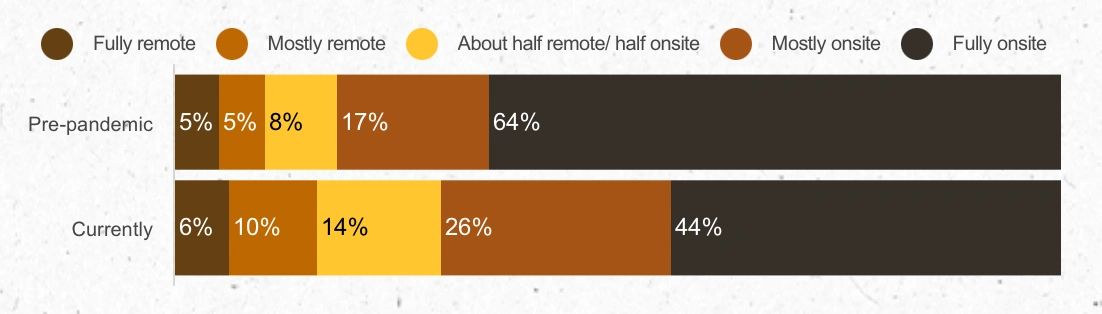
Hybrid work remains considerably more common in predominantly urban regions (Toronto, London, Ottawa, and the Kitchener-Waterloo-Barrie region), and least common in the Stratford-Bruce Peninsula, where there is a larger share of skilled trades and tourism-related work. Small businesses are more likely to be operating primarily in-person than large ones.
Despite this, 56% of organizations expect to face a labour shortage over the next year and 66% expect to see shortages in their sectors.
Looking ahead, labour shortages should soften somewhat as the economy slows down and higher immigration targets expand the labour supply.
Zooming Out To The Canadian-wide Small Business Outlook
Our index-minded readers will appreciate some statistics taken from the CFIB’s February 2023 Business Barometer for Canada.
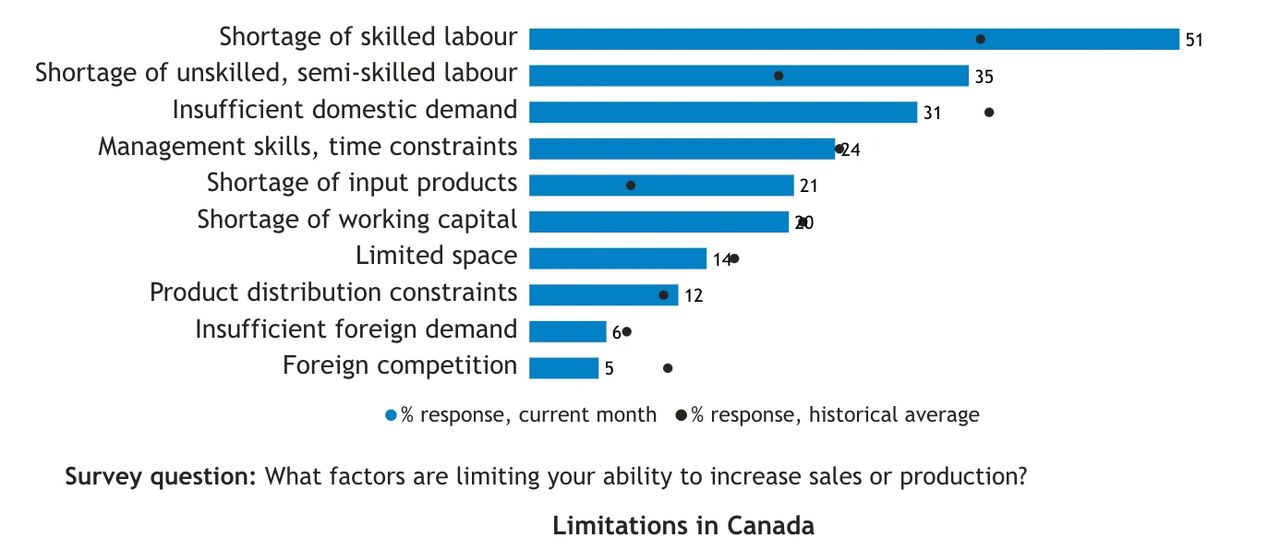
MAIN FACTORS LIMITING SALES OR GROWTH – FEB 2023
MAIN COST CONSTRAINTS – FEB 2023
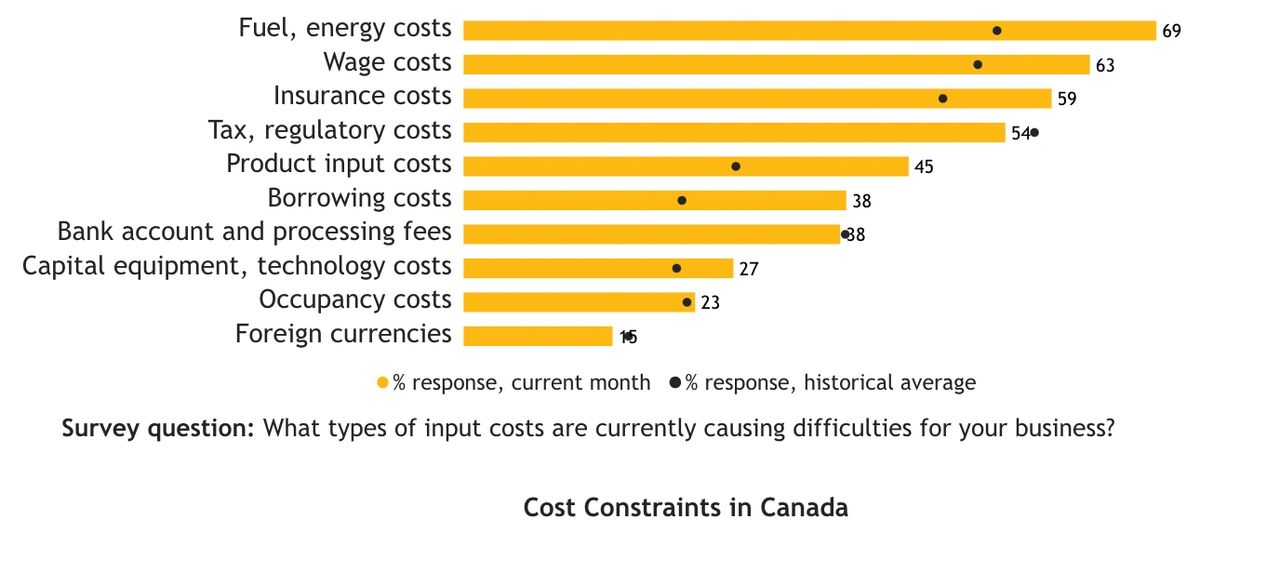
According to the CFIB, “Long-term confidence by small business in Canada has seen a timid gain of only half a point in February 2023, while the short-term optimism has inched upwards slightly.”
- Long-term index: based on 12-month forward expectations for business performance, gained barely half a point to 51.7.
- Short-term optimism index: based on a 3-month outlook, reached 48.9 (2 points higher than January).
- Outside of recessions, both indexes are generally at their lowest levels recorded since 2009.
Measured on a scale between 0 and 100, an index above 50 means owners expecting their business’s performance to be stronger over the next three or 12 months outnumber those expecting weaker performance. An index level near 65 normally indicates that the economy is growing at its potential.
Most provinces fall below normal long-term optimism with the short-term not much better. The Western provinces have each gained in optimism over the long term:
- Saskatchewan at (+4.4) has the second best reading overall and leading in terms of most improved confidence level;
- Ontario at (51.5), has remained stable, albeit at low levels;
- Quebec and three of the four Atlantic provinces at between 47 and 45 are trailing the rest of the country with levels;
- PEI is the exception in the East at 63.0 shows the highest optimism level.
Industry Overview
Long-term optimism in health & education, finance & insurance, info & recreation are the only bright spots of the sectoral outlook.
The industry picture is fairly stable with minimal changes in confidence from the previous month. Over the long term, three sectors register levels in the low 60’s:
- Health;
- Finance and insurance;
- Recreation and information sectors.
Three sectors report indexes below 50:
- Manufacturing;
- Agriculture
- Retail.
The remaining industries are seeing levels of between 50 and 60, which still represent modest optimism.
General Business Indicators
- Full-time staffing plans:
- Very weak increase in the share of business owners looking to hire (19%) for the short term;
- Supply chain indicators have improved modestly:
- Only 12% of SMEs reporting product distribution constraints versus 20% in January.
- Borrowing costs and product input costs are the top cost constraints seeing current levels of concern:
- About twice the historical average value.
- Sales or production growth is limited by labour shortages and input product shortages:
- These factors having readings well above the historical levels.
Price & Wage Plans
- Average future price increasing plans saw a weak uptick to 3.7;
- Average wage increase plans rose to 3.3 from the previous month’s 3.0.
Is Your Business Outlook Not-So-Bright?
If you’re needing make some serious changes within your business, find ways to increase your profit, or get Government or Bank funding to expand or pivot, let’s talk. We may be able to help point you in the right direction.
Are You Looking For Funding?
CLICK THIS TO SEE WHAT YOU QUALIFY FOR IN 60 MINUTES!
ADDITIONAL RESOURCES
If you love charts and graphs, you can geek-out to your hearts content with the following PDFs from the CFIB’s Business Barometer, released Feb 23, 2023.
Business Barometer – National Summary
Business Barometer – Provincial Summaries
